

Glass Door Freezers vs Chest Freezers — Which is Right for Your Business?

Introduction
When it comes to commercial freezers, the two most common options are glass door upright freezers and chest freezers. Both have their advantages, but choosing the wrong one for your business can lead to wasted space, higher energy bills, and lost sales. In this guide, we’ll compare glass door freezers and chest freezers to help you make the right decision for your shop.
Glass Door Freezers — Visibility and Accessibility
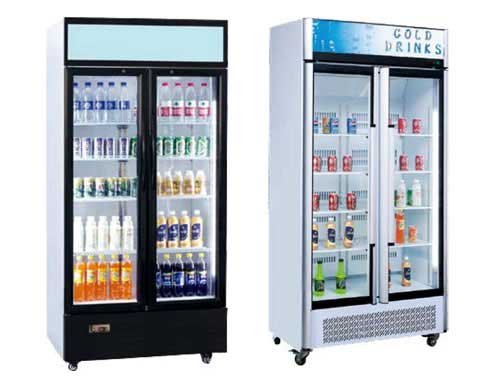
Glass door freezers are upright units with transparent doors that allow customers to see the products inside without opening the door. This is their biggest advantage — visibility drives sales. When customers can see ice cream, frozen meals, or drinks clearly displayed behind glass, they are far more likely to make a purchase.
Glass door freezers are also more accessible than chest freezers. Products are organised on shelves at eye level, making it easy for customers to browse and select what they want. There is no need to bend down or dig through layers of frozen goods, which improves the shopping experience and speeds up service.
From a store layout perspective, glass door freezers take up less floor space than chest freezers. They are tall and narrow, which makes them ideal for shops with limited space. You can place them against a wall or in a line down the centre of the store without blocking customer flow.
However, glass door freezers do have some disadvantages. They are generally more expensive to purchase than chest freezers, and their upright design means they lose more cold air when the door is opened. This can lead to higher energy consumption, although modern models with energy-efficient compressors and LED lighting have greatly improved in this area.
Chest Freezers — Maximum Storage and Energy Efficiency
Chest freezers are horizontal units with a hinged lid on top. They are widely used in supermarkets, convenience stores, and ice cream shops because they offer excellent storage capacity at a lower price point. A standard chest freezer can hold significantly more product than an upright glass door freezer of the same width.
The main advantage of chest freezers is energy efficiency. Because cold air sinks, opening the lid of a chest freezer does not cause as much cold air to escape as opening the door of an upright freezer. This makes chest freezers cheaper to run over time, which can add up to significant savings on electricity bills.
Chest freezers are also more reliable in high-temperature environments. If your shop does not have strong air conditioning, a chest freezer will maintain its internal temperature more consistently than a glass door freezer.
The downside of chest freezers is accessibility. Products at the bottom of the unit can be difficult to reach, and customers often have to dig through layers of stock to find what they want. This can slow down service and lead to products being overlooked. Additionally, chest freezers take up more floor space than upright units, which can be a problem in smaller shops.
Which One Should You Choose?
The right choice depends on your business type and priorities. If you run a convenience store, off-licence, or forecourt shop where customers want to grab products quickly, a glass door freezer is the better option. The visibility and accessibility will lead to higher sales, and the upright design fits well in tight spaces.
If you run a larger supermarket, warehouse store, or business where bulk storage is more important than display, chest freezers are the more practical choice. They offer more storage capacity, lower running costs, and better performance in warm environments.
Many businesses use a combination of both. For example, a supermarket might use glass door freezers for premium ice cream and ready meals at the front of the store, and chest freezers for bulk frozen goods further back.
Key Features to Look For
Regardless of which type of freezer you choose, there are several key features to look for. First, check the energy rating. A freezer with an A+ or A++ energy rating will cost less to run and is better for the environment. Second, look for models with LED lighting — this improves product visibility and uses far less electricity than traditional lighting.
Third, consider the defrost system. Manual defrost freezers are cheaper to buy but require regular maintenance to prevent ice build-up. Auto-defrost models are more convenient but slightly more expensive. Finally, check the temperature range and make sure the freezer can reach and maintain the required temperature for your products — typically -18°C or lower.
Conclusion
Both glass door freezers and chest freezers have their place in commercial retail. Glass door freezers offer superior visibility and accessibility, making them ideal for high-traffic convenience stores. Chest freezers provide more storage capacity and better energy efficiency, making them the go-to choice for bulk storage. At Cool Racks, we stock a wide range of both types, with expert advice available to help you choose the right freezer for your business.
Browse our full freezer range today or contact us for a quote.